Vibrant Home Entrances in Qassim Foster Greening Culture, Enhance Urban Landscape
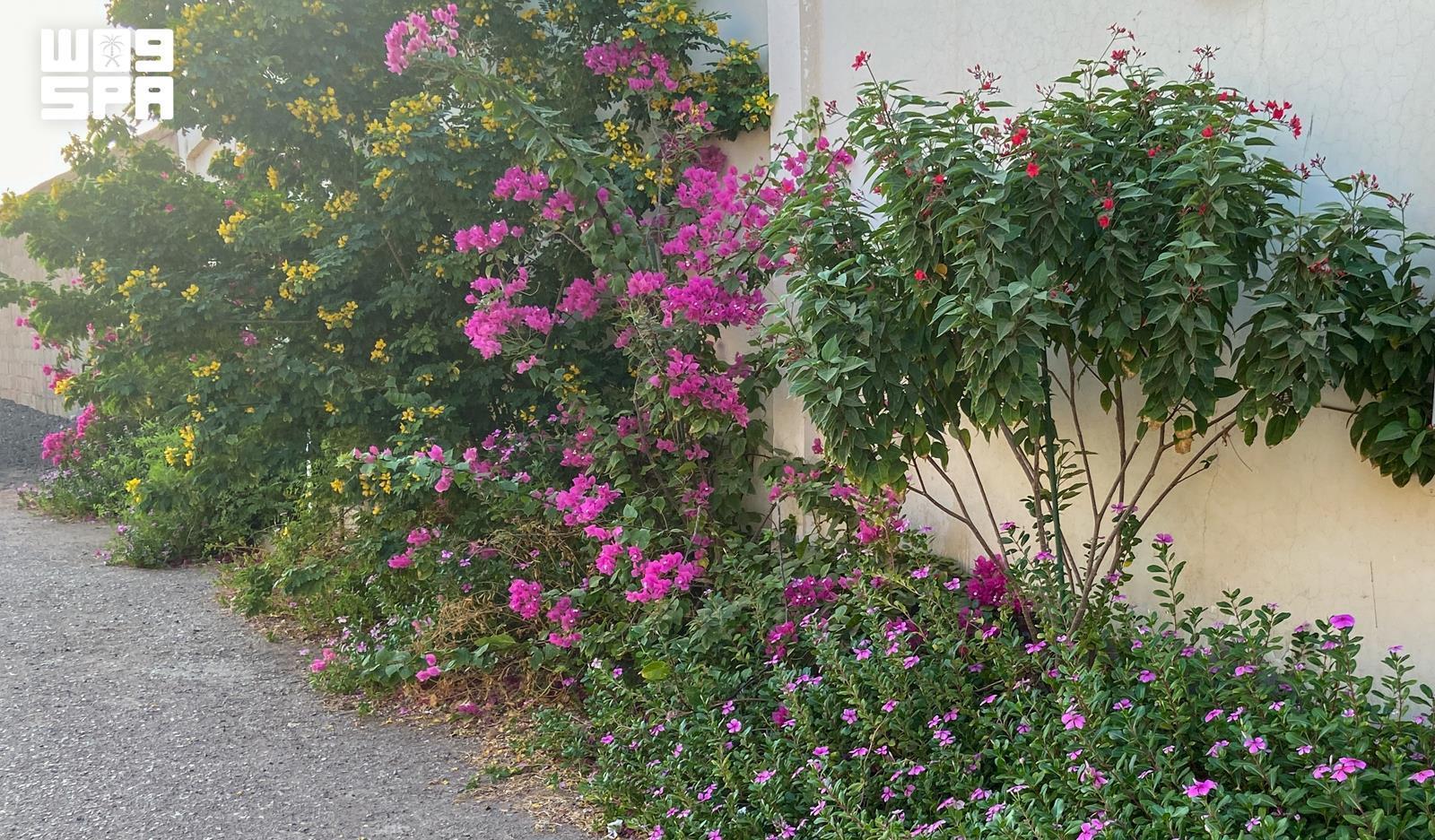
Across Qassim Region, vibrant flowers and ornamental foliage are transforming residential entryways into welcoming green spaces, reflecting a growing community commitment to outdoor landscaping, environmental stewardship, and neighborhood beautification.
This approach blends aesthetics with regional traditions of hospitality and care for one's domestic environment. Homeowners utilize climbing plants on exterior walls, boundary fences, and entry arches, complemented by terracotta and stone planters along walkways. Among the prominent species favored for local facades is bougainvillea, selected for its rich spectrum of blooms and adaptable growth. Other popular varieties include frangipani, Arabian jasmine, damask roses, basil, lavender, and diverse seasonal ornamentals suited to outdoor settings.
Given the region's arid summer climate and seasonal shifts, sustainability remains central to residential landscaping. Local nursery operator Abdulrahman Al-Saleh noted that Qassim hosts more than 55 native plant species suitable for cultivation—ranging from trees and shrubs to perennials and annuals. He emphasized that leveraging native flora ensures greater climate adaptability, water efficiency, and visual vitality.
Al-Saleh pointed out that entry beautification has expanded beyond expansive villas to compact residential spaces through vertical planters, hanging pots, and climbing trellises that preserve pedestrian access. Careful coordination of color, scale, light requirements, and drainage allows homeowners to establish balanced botanical entryways without requiring full-scale gardens.
To ensure long-term sustainability, residents increasingly adopt water-conservation practices, including drip irrigation systems, scheduled watering cycles, organic mulching to limit evaporation, and drought-tolerant species selection.
Beyond enhancing the visual landscape and neighborhood cleanliness, this widespread interest in residential gardening has energized the local economy. Nurseries, landscaping enterprises, families working in the cottage industry, and small agricultural businesses continue to see sustained demand for seedlings, specialized soil, smart irrigation hardware, and maintenance services—reinforcing a sustainable culture of urban greening across the region.