KFSH Advances Deep Brain Stimulation Surgery with an Integrated Robotic System
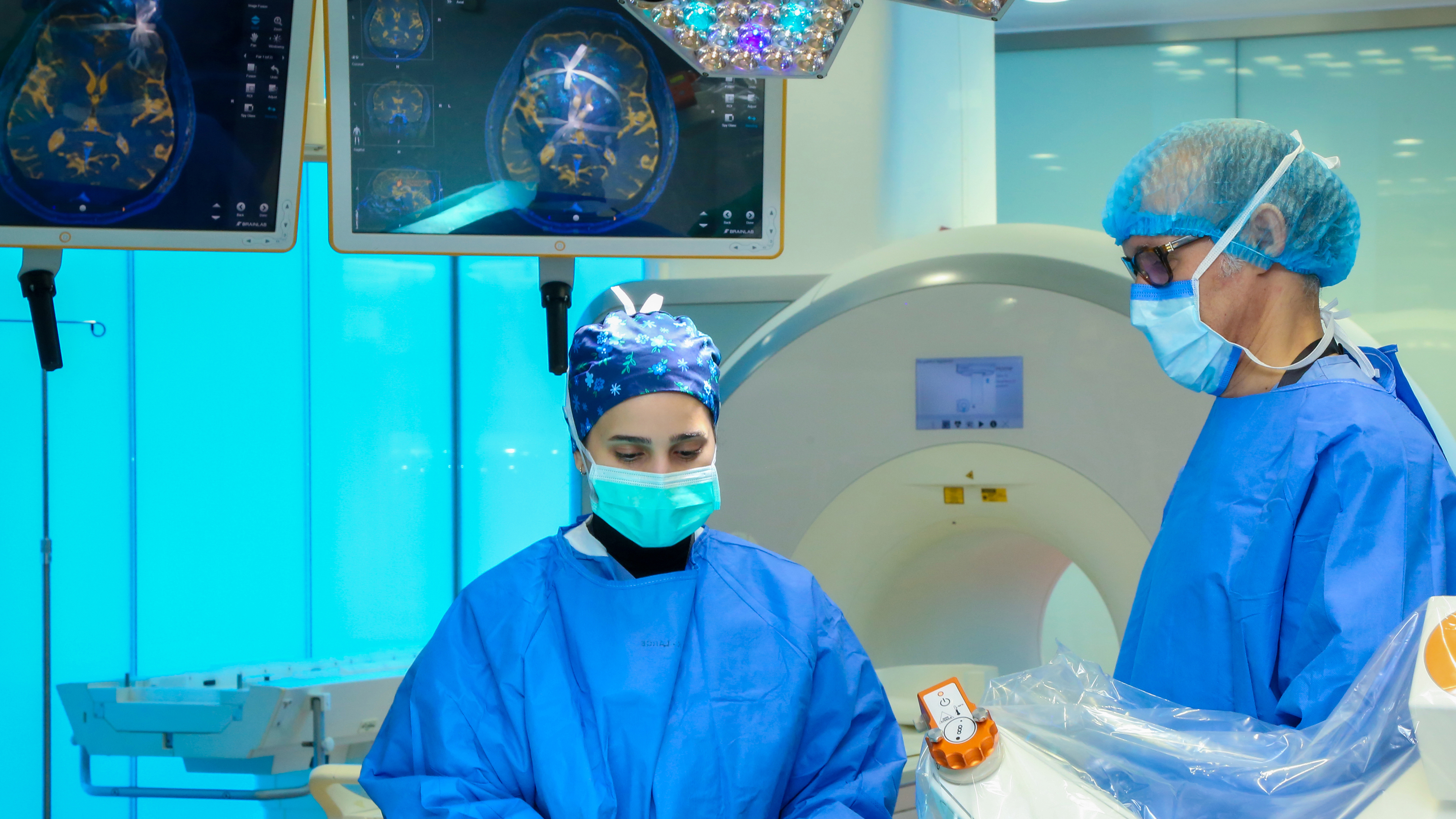
King Faisal Specialist Hospital and Research Centre (KFSH) in Riyadh successfully used robotic technology for deep brain stimulation surgery to treat movement disorders, performing several procedures for the first time in the Middle East and North Africa. The robotic approach allowed highly precise planning and guided placement of stimulation electrodes in the target area deep in the brain, while reducing the manual steps and procedures involved in traditional surgery.
As part of the Neuroscience Centre of Excellence programs at KFSH for treating movement disorders, the integrated robotic system combines advanced imaging, real-time navigation, and robotic guidance to help surgeons define the surgical trajectory and reach the required brain target with submillimeter precision, a critical level of accuracy in procedures involving small, sensitive areas that control movement and other precise neurological functions.
Unlike the traditional frame guided approach, which requires separate planning stations, coordinate transfer, and assembly and fixation of a stereotactic frame, the robotic system brings planning, targeting and guidance into a single platform, reducing procedural steps and lowering the likelihood of error in a surgery that demands the highest levels of precision and safety.
Deep brain stimulation is an advanced treatment option for patients with movement disorders. It involves implanting an electrode in a specific area of the brain to deliver regulated electrical pulses that help reduce symptoms such as tremor, dystonia and rigidity, particularly when medication does not provide sufficient symptom control and the patient’s quality of life is affected.
For eligible patients, the robotic assisted approach may offer smaller surgical openings, reduced impact on surrounding tissue, shorter time in the operating room, faster recovery and greater comfort after the procedure, while supporting more consistent surgical outcomes in cases requiring electrode placement in deep areas of the brain.
The procedure reflects close collaboration among movement disorder specialists, specialized neurosurgeons, neuroanesthesia teams, operative neurosurgical nurses, coordinators, neuroradiology specialists, biomedical engineers and the team responsible for microelectrode recording from targeted deep brain areas, within an integrated care model that connects accurate diagnosis with surgical planning, safe execution and clinical follow up.
King Faisal Specialist Hospital has been ranked first in the Middle East and North Africa and 12th globally among the world’s top 250 Academic Medical Centers for 2026 and recognized as the most valuable healthcare brand in the Saudi Arabia and the Middle East according to Brand Finance 2026. It has also been listed by Newsweek among the World’s Best Hospitals 2026, the World’s Best Smart Hospitals 2026, and the World’s Best Specialized Hospitals 2026.