Ministry of Energy Hosts IEF17 and Seventh JODI Heads Meeting in Riyadh
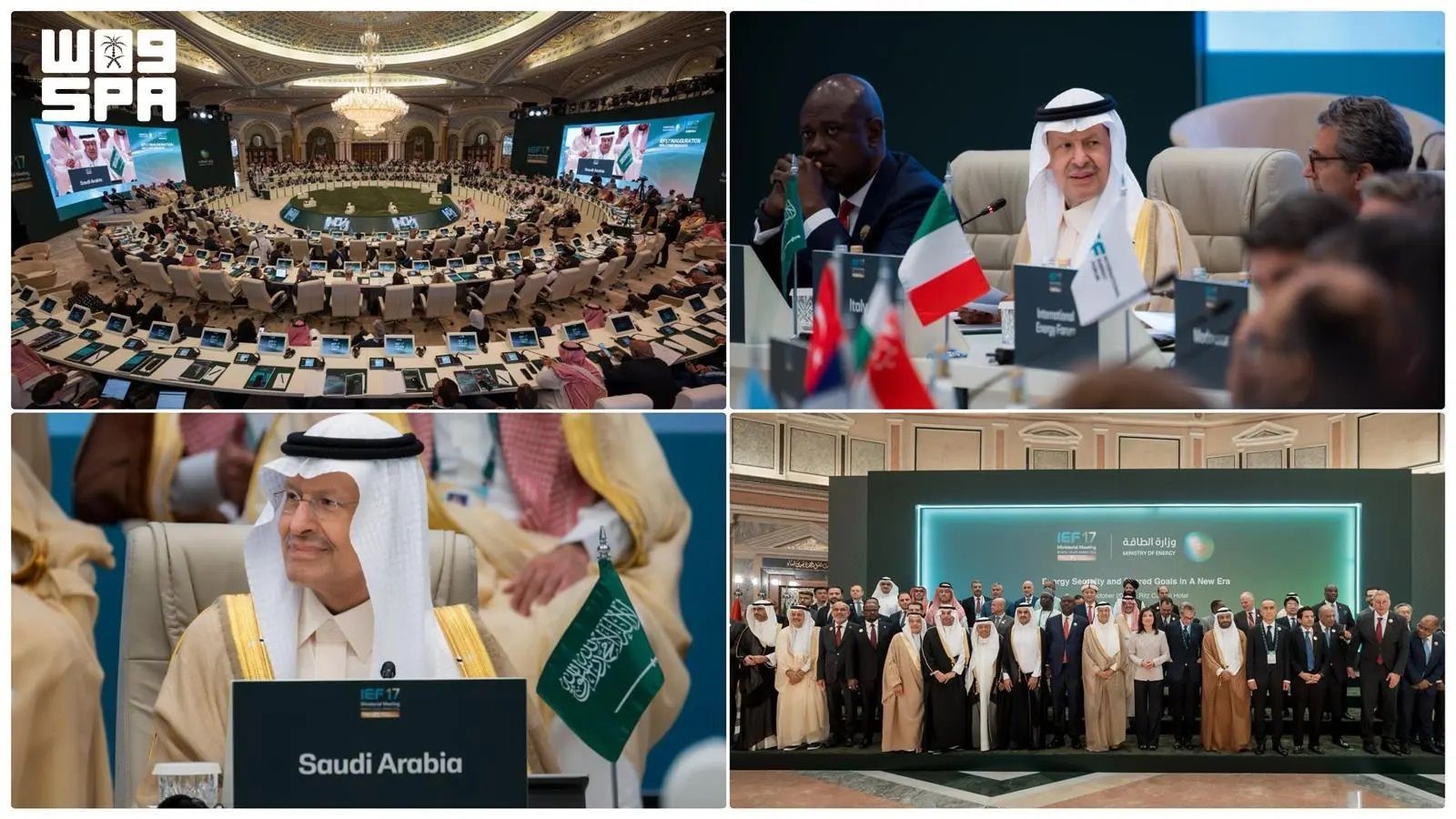
Minister of Energy and Minister of Industry and Mineral Resources Prince Abdulaziz bin Salman bin Abdulaziz opened the 17th International Energy Forum Ministerial Meeting (IEF17) in Riyadh today. Saudi Arabia is hosting the meeting alongside co-hosts Italy and Nigeria under the theme “Energy Security and Shared Goals in a New Era.”
In his opening remarks to the ministerial session, Prince Abdulaziz said Saudi Arabia has demonstrated its ability to ensure reliable energy supplies while continuing to invest and prepare for a range of circumstances and challenges. He described Riyadh as the “capital of energy security,” stressing that the Kingdom remains committed to fulfilling its obligations and ensuring reliable energy supplies under all circumstances.
Prince Abdulaziz pointed to the East–West Pipeline as an example of this commitment and of the Kingdom’s long-term foresight in strengthening the resilience of its energy system. The pipeline provides an alternative route for transporting energy supplies to international markets through Yanbu on the Red Sea.
He also stressed that delivering energy security is a shared responsibility that no country can undertake alone and requires effective international cooperation and coordination. Energy security, he said, is fundamental to economic stability and sustainable growth, and compromising it puts economies and their competitiveness at risk.
Prince Abdulaziz recalled the extreme volatility in energy markets in 2008, noting that the experience underscored the importance of dialogue, investment and preparedness in responding to changing market conditions and ensuring that future demand can be met.
In this context, he highlighted the role of the International Energy Forum as a platform that brings together producing, consuming and transit countries to strengthen dialogue, discuss challenges, understand differing perspectives and identify practical areas for cooperation in support of energy security.
Prince Abdulaziz noted that energy infrastructure takes years to develop and that strengthening its resilience requires investment and preparation well before it is needed. Maintaining flexibility across the energy system comes at a cost, he said, but the cost of being unprepared can be far greater for the global economy. He stressed that energy security requires investment across the energy system, including refining capacity, transportation, pipelines and infrastructure, and noted that Saudi Arabia is pursuing a comprehensive approach to energy security encompassing oil, gas, renewable energy, nuclear energy and geothermal energy.
Prince Abdulaziz chaired the meeting, with the participation of Italy’s Minister of the Environment and Energy Security Gilberto Pichetto Fratin and Nigeria’s Minister of State for Petroleum Resources (Oil) Senator Heineken Lokpobiri. International Energy Forum Secretary General Eng. Jassim Isa Al-Shirawi also participated in the inauguration programme. The four officials are identified as part of the inauguration programme in the original English release.
Held as part of Energy Week in Riyadh, IEF17 brought together energy ministers, industry leaders and heads of international organizations for discussions on energy security, market stability and investment, as well as stronger dialogue between energy producers and consumers amid shifts in global energy markets.
The ministers and industry representatives expressed solidarity with Saudi Arabia and its people following attacks on civilians.
The IEF Secretary General, ministers and delegates also welcomed an announcement that the United States would rejoin the IEF.
The first plenary, chaired by S&P Global Vice Chairman Dr. Daniel Yergin, examined energy security as a shared responsibility, including market fundamentals, supply chain resilience and changing demand and supply dynamics. The second plenary, chaired by Energy Aspects Founder and Director of Market Intelligence Dr. Amrita Sen, focused on investment and trade in sustainable energy solutions and efforts to make energy clean, accessible and affordable.
The concluding session addressed market stability, producer-consumer dialogue and data transparency. Across the programme, discussions underscored the need for reliable energy supplies and the investment, trade and technology required to support different national energy pathways, reflecting countries’ individual priorities and circumstances.
Priorities included more resilient infrastructure, diversified supply chains and investment in production, refining, liquefied natural gas, power grids and energy storage, alongside the deployment of new technologies and the development of critical mineral supply chains.
Energy Week in Riyadh also included the seventh meeting of the Heads of JODI Partner Organizations, which endorsed the 2026–2030 Roadmap for the Joint Organizations Data Initiative (JODI), coordinated by the International Energy Forum (IEF). The roadmap aims to strengthen countries’ data-reporting capabilities and provide more comprehensive and timely oil and gas data, including data on inventories and refined products. Ministers participating in IEF17 also welcomed continued cooperation under the Joint IEA-IEF-OPEC Work Programme.
Headquartered in Riyadh, the International Energy Forum is the world’s largest international organization of energy ministers. It provides a platform for dialogue between energy-producing and energy-consuming countries and across the public and private sectors.