Al-Shatti to Riyadh Daily: Global Oil Demand Falls by 3.7 Million Barrels per Day as Hormuz Crisis Reshapes Energy Security
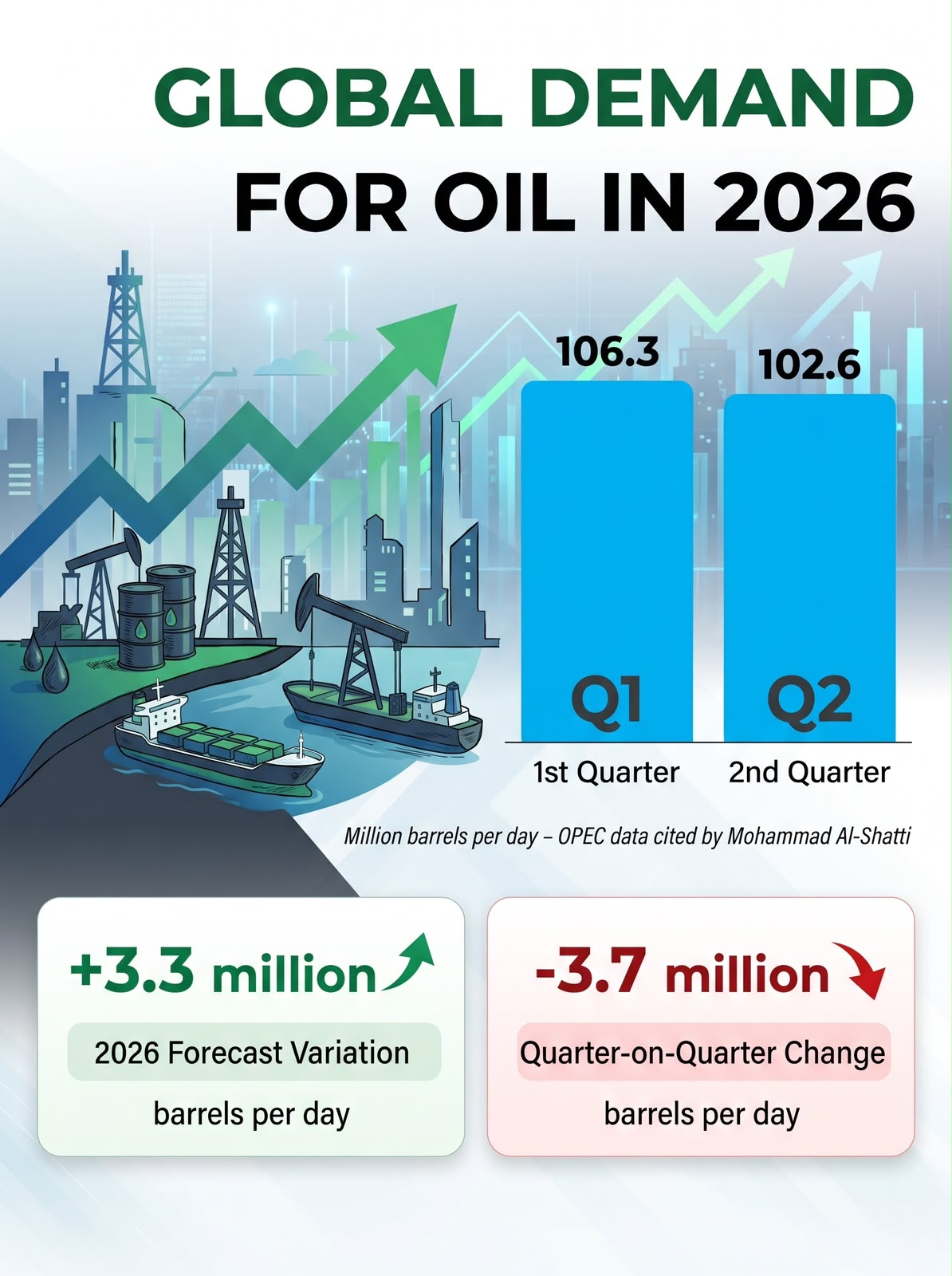
Former Kuwait representative to the Organization of the Petroleum Exporting Countries (OPEC) and oil expert Mohammed Al-Shatti revealed that global oil demand declined by 3.7 million barrels per day during the second quarter of 2026 compared with the first quarter, according to OPEC data he presented in an interview with Riyadh Daily.
The decline comes as global energy markets face significant disruptions caused by the Strait of Hormuz crisis, rising transportation and insurance costs, and widening differences among international institutions over the future of oil demand.
Al-Shatti explained that global oil demand fell from 106.3 million barrels per day in the first quarter to 102.6 million barrels per day in the second quarter, with Asian economies, particularly China and India, among the markets experiencing the most significant declines.
He emphasized that the disruption of strategic maritime routes has revealed a fundamental shift in the concept of global energy security. The strength of oil-producing countries is no longer measured solely by the size of their reserves and production capacity, but also by their ability to ensure reliable energy deliveries to consumers under all circumstances.
Asia Leads the Decline in Oil Demand
Al-Shatti noted that OPEC figures showed a decline of approximately 3.1 million barrels per day in oil demand across Asian markets during the second quarter of 2026, including China, India, Japan, and South Korea.
The data indicated that China’s oil demand declined from approximately 17.2 million barrels per day in the first quarter to 15.9 million barrels per day in the second quarter. Meanwhile, India’s demand decreased from 5.9 million to 5.3 million barrels per day over the same period.
He explained that Asian oil-importing countries responded to supply disruptions by drawing on strategic petroleum reserves, diversifying import sources, reducing consumption, and expanding the use of alternative energy sources.
China, in particular, managed to absorb part of the shock thanks to its substantial oil reserves, diversified suppliers, growing electric vehicle market, and domestic electricity generation capacity.
Global Institutions Divided by 3.3 Million Barrels per Day
Highlighting the uncertainty surrounding the future of oil markets, Al-Shatti pointed to significant differences in global oil demand forecasts for 2026.
While OPEC expects global demand to reach approximately 105.7 million barrels per day, the International Energy Agency (IEA) and the US Energy Information Administration (EIA) project demand at around 102.4 million barrels per day, representing a difference of 3.3 million barrels per day.
Al-Shatti explained that this gap is more than a statistical discrepancy. It reflects fundamentally different assessments of the global economy’s ability to withstand higher energy prices, shortages of petroleum products, and slowing industrial activity.
Looking ahead to 2027, OPEC forecasts a recovery in global oil demand to 108.3 million barrels per day, compared with 104.4 million barrels per day projected by the IEA and 104.6 million barrels per day by the EIA.
He stressed that these forecasts should be treated as alternative scenarios rather than relying on a single outlook when making investment and operational decisions.

Mohammed Al-Shatti
Hormuz Crisis Extends Beyond Oil Production
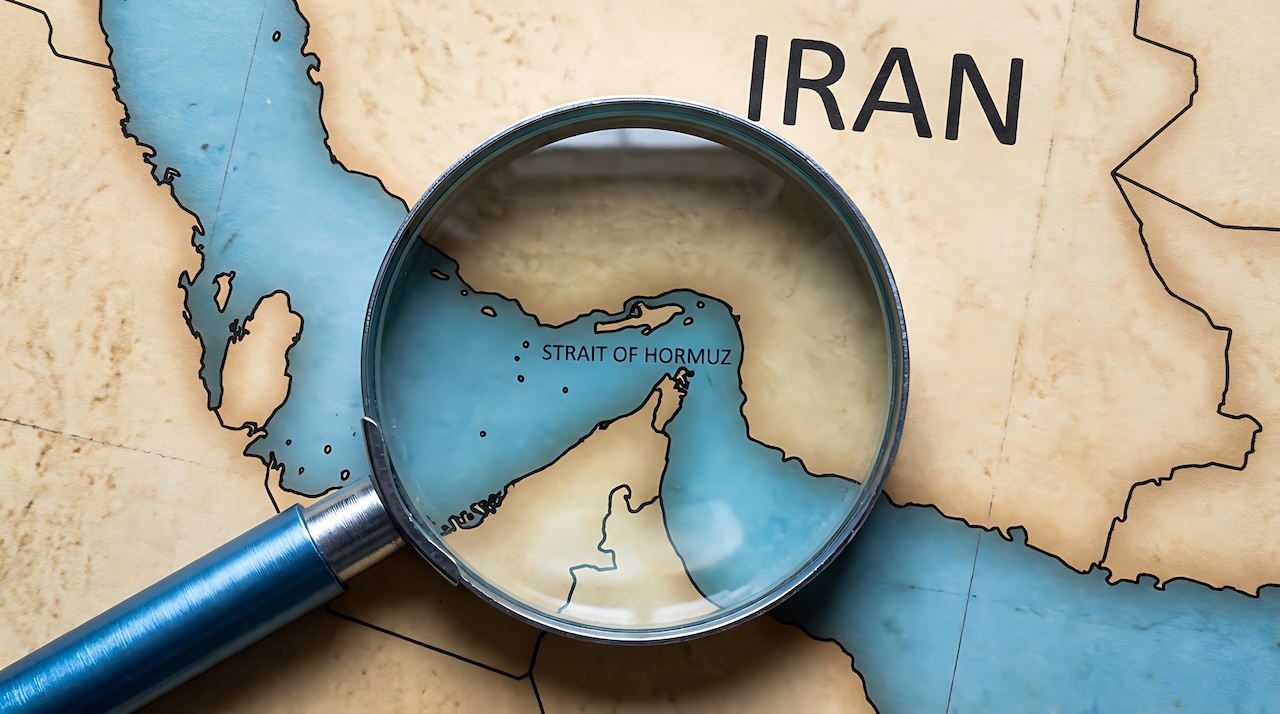
Addressing disruptions to shipping through the Strait of Hormuz, Al-Shatti said the waterway can no longer be considered fully open under normal international trading conditions, although it has not been completely closed.
He described current energy shipments through the strait as intermittent, selective, and exposed to substantial security risks.
Before the crisis, approximately 20 million barrels per day of crude oil and petroleum products passed through the strait, alongside nearly one-fifth of global liquefied natural gas (LNG) trade.
Al-Shatti noted that crude oil exports initially dropped to less than 10% of their pre-crisis levels before some shipments resumed through alternative arrangements and restricted maritime routes.
However, transportation has remained more expensive and less predictable.
He highlighted the growing impact of tanker freight and insurance costs on energy prices, citing estimates reaching $40 per barrel or more under elevated-risk conditions.
Such costs illustrate the additional financial burden that energy shipments may face during periods of heightened geopolitical instability.
He also warned that the crisis affects more than oil exports. It can prevent producers from fully utilizing spare production capacity when shipments cannot reach international markets or storage facilities become full.
Saudi Arabia and the UAE Gain Strategic Flexibility
Al-Shatti explained that Gulf oil producers have demonstrated varying levels of resilience during disruptions to the Strait of Hormuz, depending on their geographical positions and previous infrastructure investments.
Saudi Arabia has benefited from its East-West Pipeline, which transports crude oil to Yanbu on the Red Sea, while the United Arab Emirates has relied on the Habshan-Fujairah pipeline, which provides an export route outside the strait.
These pipelines have offered both countries greater flexibility in maintaining oil exports during periods of disruption.
However, Al-Shatti emphasized that the alternative routes cannot fully replace the total volumes of oil and gas normally transported through the Strait of Hormuz.
Other producers faced greater difficulties because they lacked comparable export infrastructure.
In some cases, the inability to load tankers and the exhaustion of available storage capacity forced producers to reduce output.
He noted that Gulf producers subsequently managed to restore a substantial share of their exports through alternative shipping arrangements, storage solutions, and transportation routes, helping them maintain their presence in international energy markets.
Diesel Prices Reveal the Wider Economic Impact
Al-Shatti emphasized that the consequences of energy supply disruptions cannot be measured by crude oil prices alone.
Middle distillates, particularly diesel, have been among the petroleum products most affected by the crisis.
Disruptions to Gulf exports and reduced refinery operations in Asia have contributed to higher diesel prices and refining margins, with the resulting costs spreading across transportation, agriculture, manufacturing, and consumer goods.
He stressed that a comprehensive assessment of energy markets requires monitoring refined product prices, freight and insurance costs, and fuel availability rather than focusing exclusively on Brent crude prices.
Energy Security Enters a New Era
Looking to the future, Al-Shatti argued that prolonged disruptions to strategic maritime routes will encourage both producing and consuming countries to reassess their energy security strategies.
These changes may include expanding storage facilities outside vulnerable shipping chokepoints, investing in alternative pipelines and ports, diversifying suppliers, and strengthening capabilities in energy trading and risk management.
He added that the crisis could accelerate investments in renewable energy, electricity infrastructure, and electric vehicles as countries seek to reduce their dependence on fuels transported through international maritime routes.
At the same time, some countries may temporarily increase their use of coal and conventional fuels to compensate for supply shortages.
Al-Shatti concluded that oil and natural gas will remain essential components of the global energy mix.
However, future competition among energy-producing nations will depend not only on production capacity and the size of their reserves, but also on the cost of delivering energy, the reliability of supply chains, and their ability to withstand geopolitical disruptions.