A Century of Care and Craftsmanship: History of the Holy Kaaba’s Kiswa in the Saudi Era
For more than a century, the Holy Kaaba’s Kiswa has been one of the most prominent signs of the Kingdom of Saudi Arabia’s care for the Holy Kaaba, with successive Saudi kings overseeing its production and development from the era of the founder, King Abdulaziz bin Abdulrahman Al Saud, to the present day.
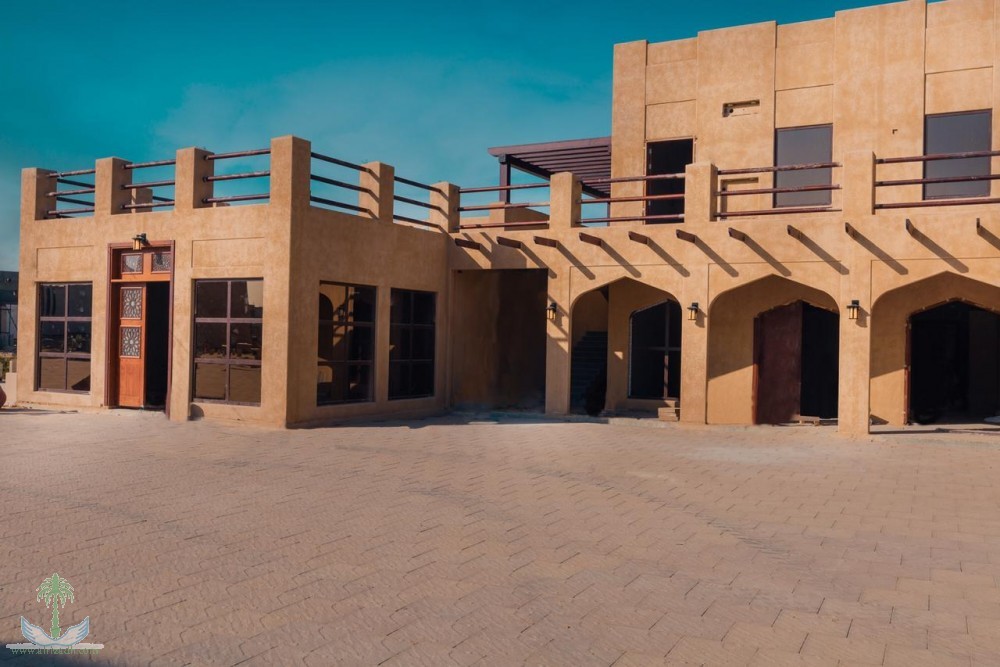
Kiswa production in the Saudi era began in 1345 AH, when King Abdulaziz ordered a Kiswa to be made for the Holy Kaaba from broadcloth lined with durable fabric. In 1346 AH, he ordered the establishment of the first Saudi workshop for producing the Holy Kaaba’s Kiswa in Ajyad, Makkah.
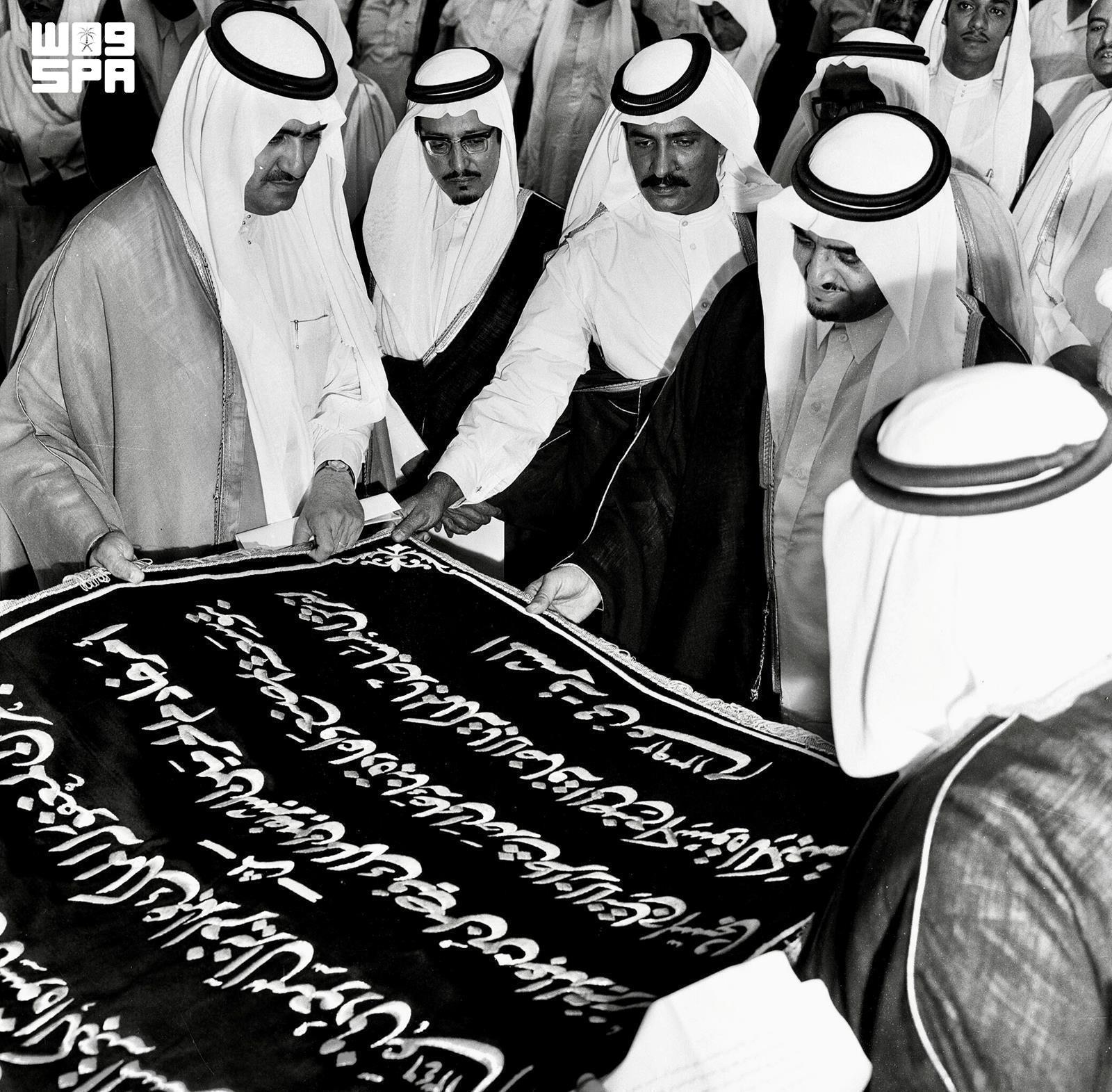
During the reign of King Saud bin Abdulaziz, oversight and production of the Kiswa continued. Under King Faisal bin Abdulaziz, the Holy Kaaba Kiswa Factory was renovated, and its facilities were upgraded.
The development of Kiswa production and enhancement of its capabilities continued under King Khalid bin Abdulaziz, while the reign of King Fahd bin Abdulaziz saw the modernization of the Kiswa factory and the upgrading of its technical equipment.
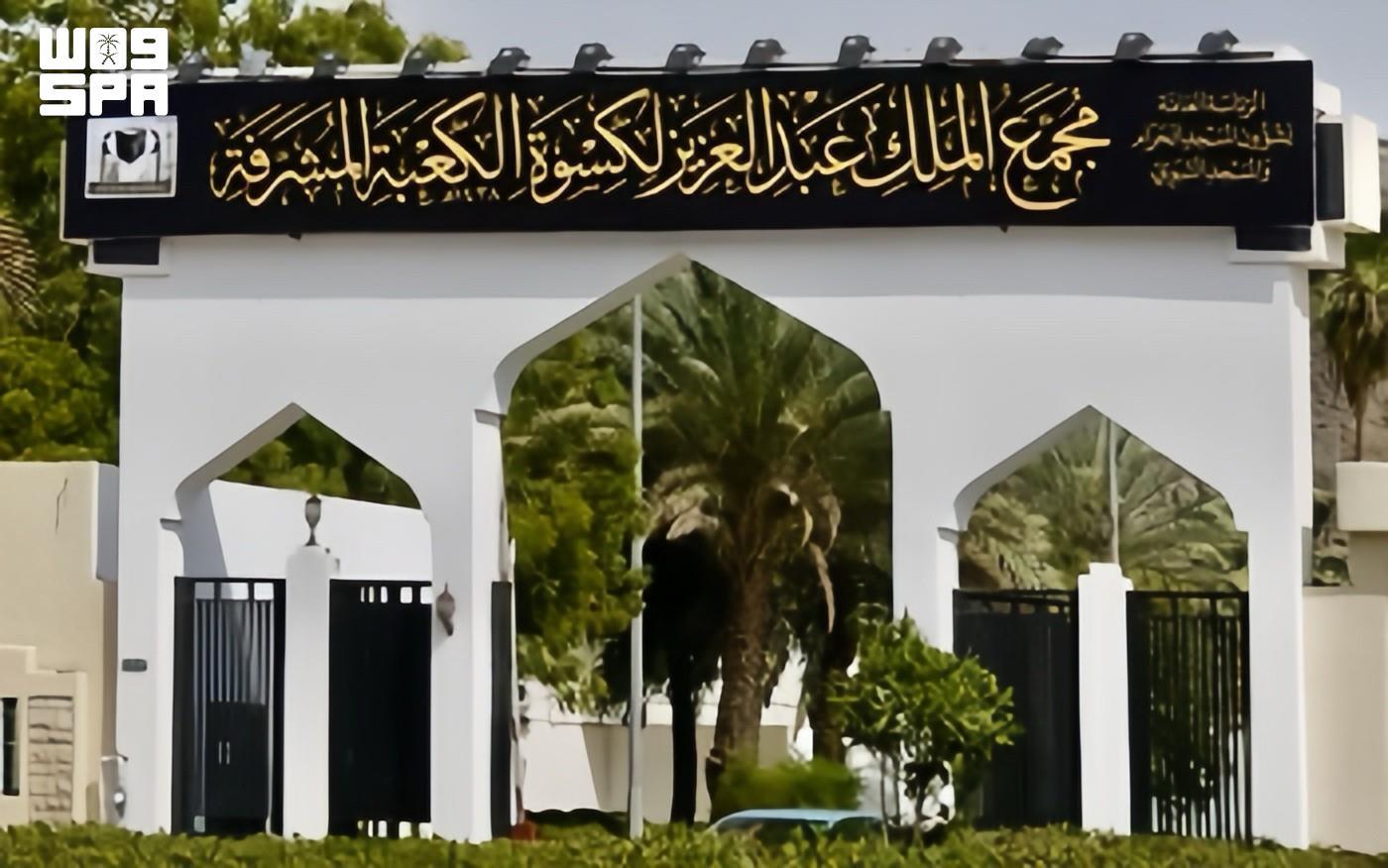
During the reign of King Abdullah bin Abdulaziz, he oversaw the King Abdulaziz Complex for the Holy Kaaba Kiswa in Umm Al-Joud, continuing support for this specialized facility.
Under the Custodian of the Two Holy Mosques, King Salman bin Abdulaziz Al Saud, Kiswa production has seen further development, including improvements to the fabric used and supporting technologies, thereby enhancing quality across the various stages of production.
These milestones highlight the development of the Holy Kaaba’s Kiswa production in the Saudi era, from a small workshop in Ajyad to a specialized complex in Umm Al-Joud.