What Makes Al-Naslaa a Rock of Geological Wonder and Rich Historical Heritage?
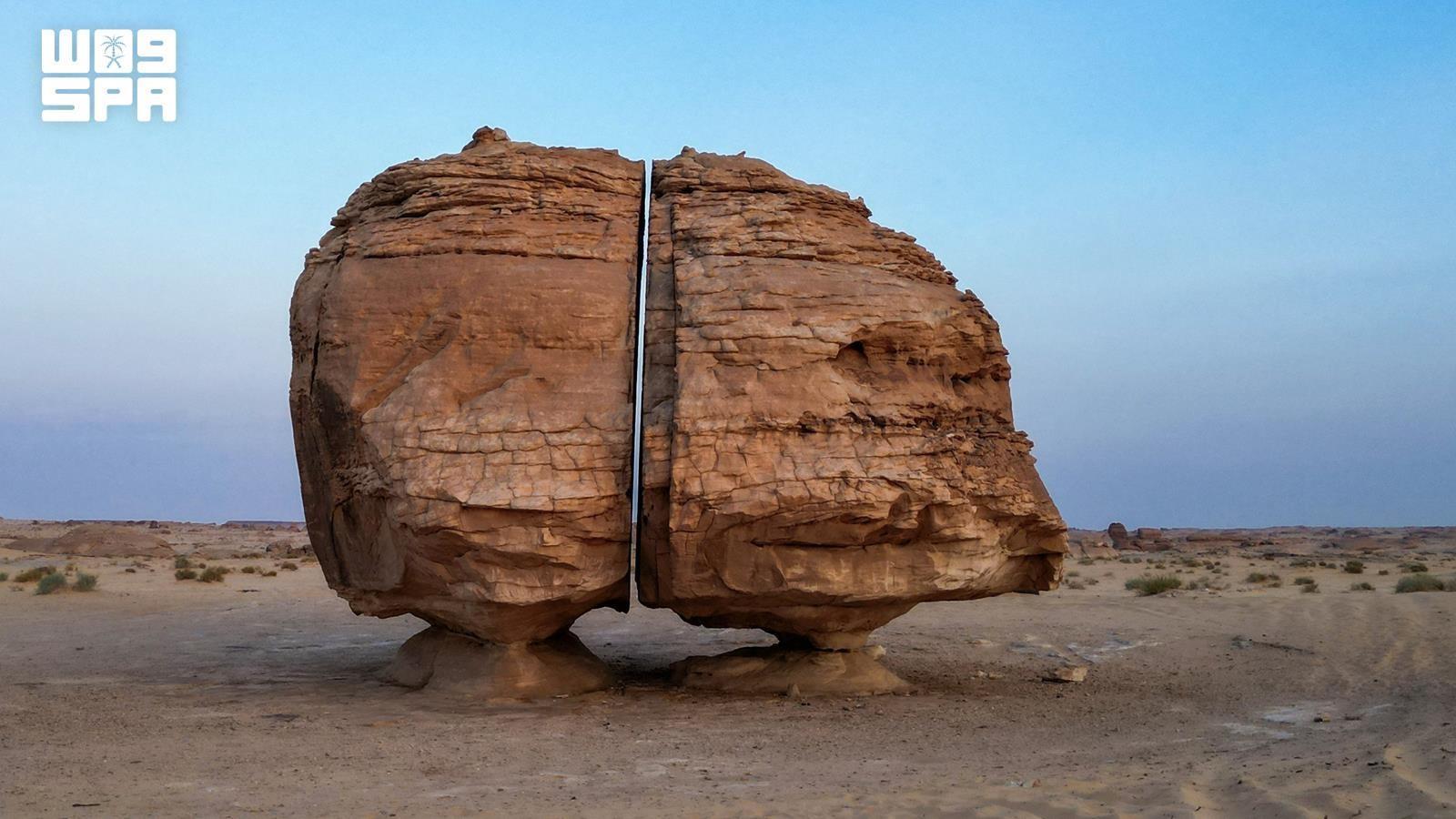
Two adjoining rock formations stand in southwestern Tayma Governorate in Tabuk Region, collectively known as Al-Naslaa rock, often described as the “twin” rock because of the strikingly straight, narrow gap dividing its two sections and giving the impression of a clean split. The name “Al-Naslaa” derives from the Arabic nasalat (to separate), describing the rock’s detachment from the surrounding mountains.
Standing about eight meters high, the formation rests on two natural rock bases, each supporting one section. Its unusual geological structure, together with the ancient inscriptions and art carved into its surface, has made Al-Naslaa one of Tayma’s most distinctive tourist attractions.
According to the Heritage Commission, Al-Naslaa is located within a wider area renowned for its diverse archaeological remains and rock inscriptions, reflecting the historical importance of Tabuk Region and Tayma in particular. For centuries, Tayma was an important stop along the ancient trade routes crossing northwestern Arabia.
The “twin” rock has gained renown as one of the Kingdom’s most distinctive natural geological landmarks, combining the uniqueness of its rock formation with a rich historical heritage preserved in its inscriptions, which together tell the story of a landscape shaped over time by natural forces.