Why Does the Historic Haddaj Well Symbolize Generosity in the Arabian Peninsula?
The Haddaj Well, situated in the heart of Tayma within Tabuk Region, stands as one of the oldest and most significant historical wells in the Arabian Peninsula.
According to the Encyclopedia of the Kingdom of Saudi Arabia published by the King Abdulaziz Public Library, this architectural marvel is believed to date back to the 6th century BC. Long celebrated for its exceptionally abundant water supply, the well has evolved into an enduring symbol of hospitality and generosity in local memory.
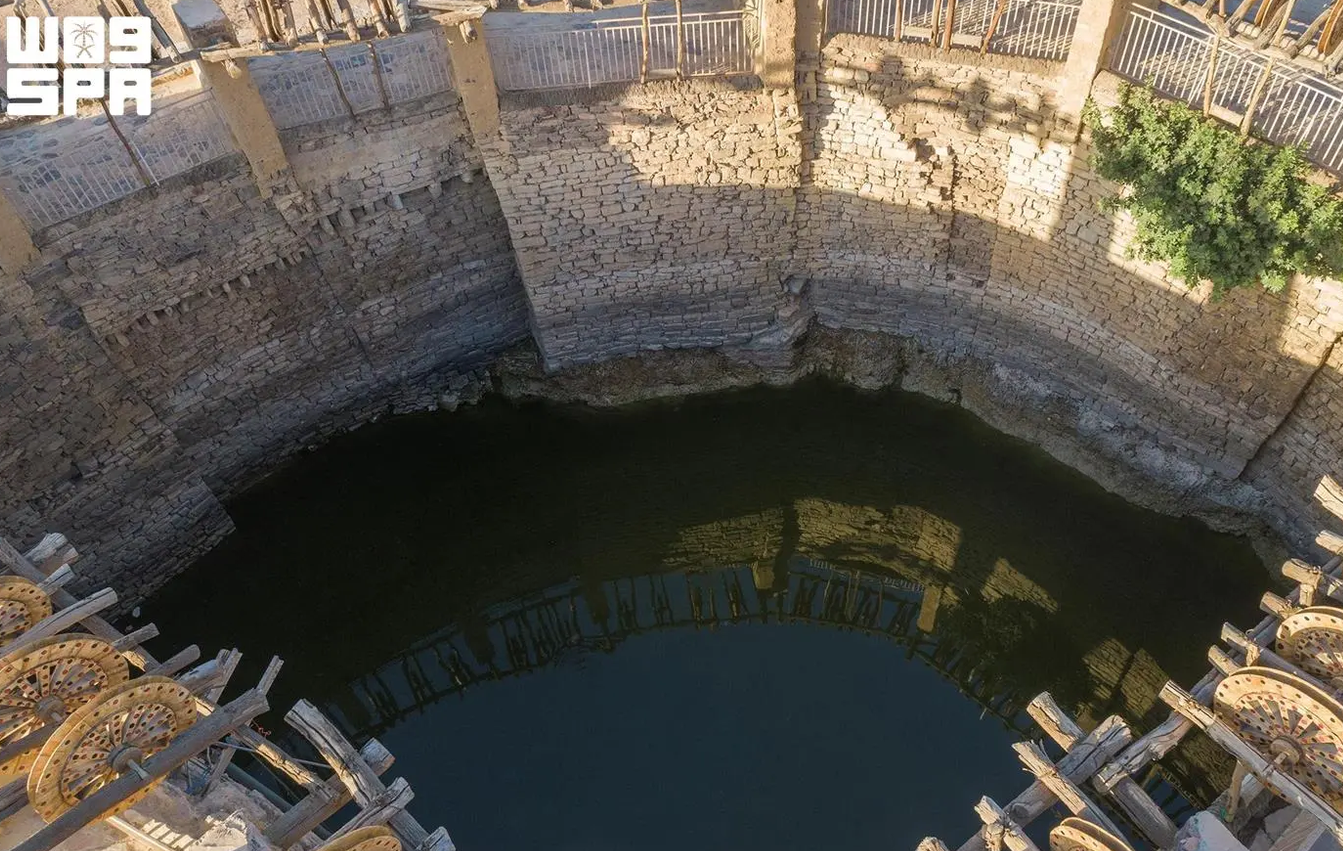
Constructed of meticulously polished stone and flanked on all sides by lush palm trees, the massive well measures 65 meters in circumference with a depth ranging between 11 and 12 meters. In its historical peak, water was channeled from the depths through 31 stone pipes, providing enough capacity to irrigate up to 100 camels simultaneously during the harsh summer months.
The ancient well continued to serve residents, nearby farms, and nomadic Bedouin tribes using traditional wooden waterwheels until 1373 AH (1954). Following a comprehensive restoration project in 1433 AH (2012), the site was transformed into a prominent archaeological and tourist landmark.
Today, its historic waters continue to flow, bridging the region's deep past with its present.