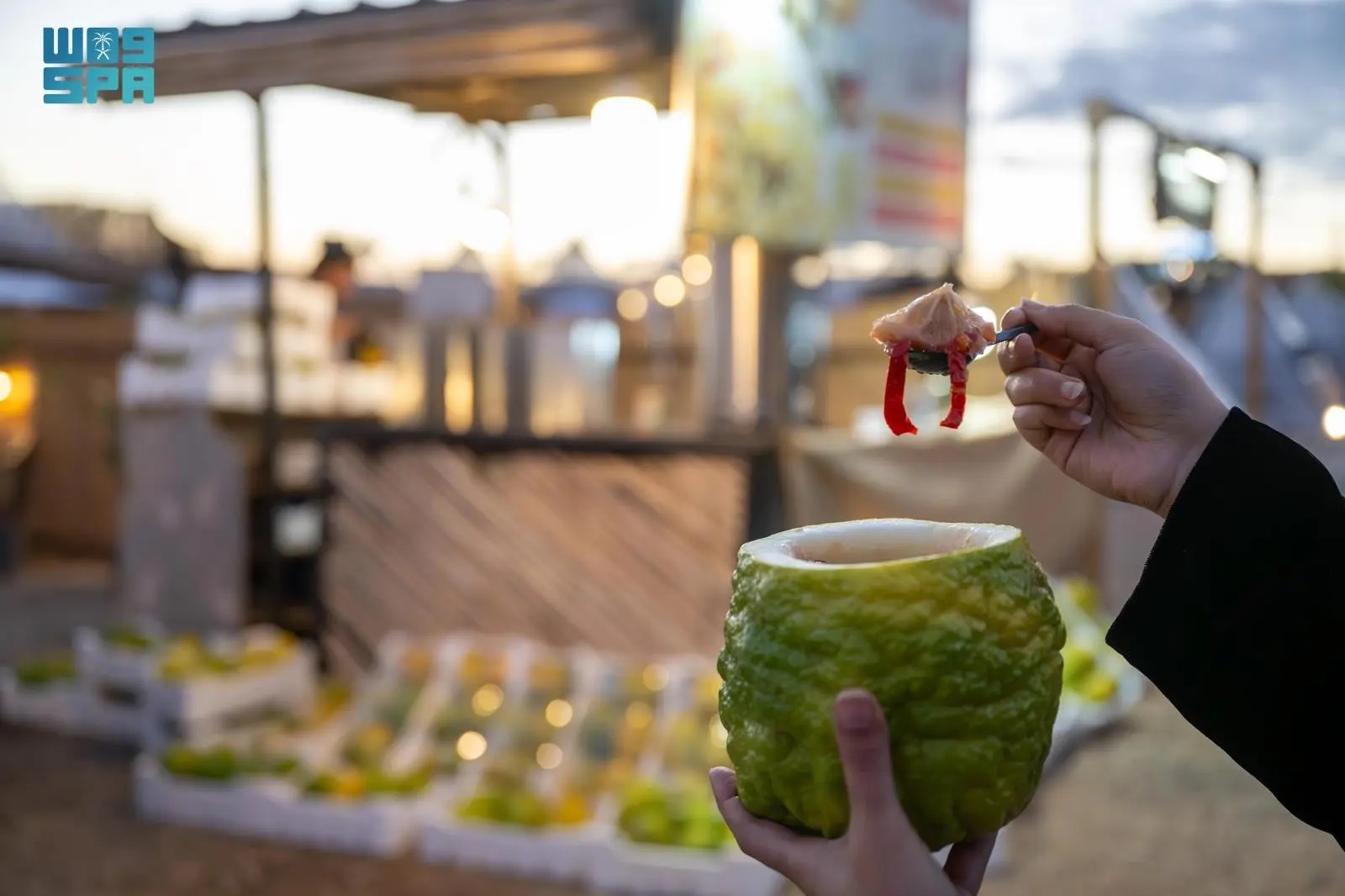
Citron Fruit: Winter Delight in Al-Jouf Region
As winter arrives, the citron fruit becomes a cherished presence in the homes, dining tables, and social gatherings of Al-Jouf residents, a region renowned for its abundant production of this distinctive fruit.
The citron tree belongs to the citrus family and is one of the most widely cultivated trees in the region after olive and palm trees, thanks to the suitable climate and the availability of water and fertile land. Known as the Kingdom’s food basket, Al-Jouf Region sees citron trees grown on farms as well as in home gardens and the courtyards of some houses.
Citron fruits are used in preparing many traditional dishes, juices, and beverages. During cold winter days, many residents of Al-Jouf are keen to prepare “Mareesat Al-Tronj,” a traditional mixture made by peeling and deseeding the citron, cutting it into small cubes, and seasoning it with chili, turmeric, and mint, along with salt, dates, or sugar according to individual taste. Others prefer to enjoy citron fresh after slicing it, or in the form of jam made from the fruit pulp, or as pickles.
Citron is also used in a variety of flavored juices, including turmeric, ginger, and mint, and features in traditional dishes in several regions of the Kingdom. In addition, it is used in food-processing industries such as jam production.
Citron fruits come in various shades of yellow and green, and sometimes orange. Sweet in flavor and low in acidity, they resemble lemons in shape but are noticeably larger. The fruiting season begins in winter, extending from December through March.